
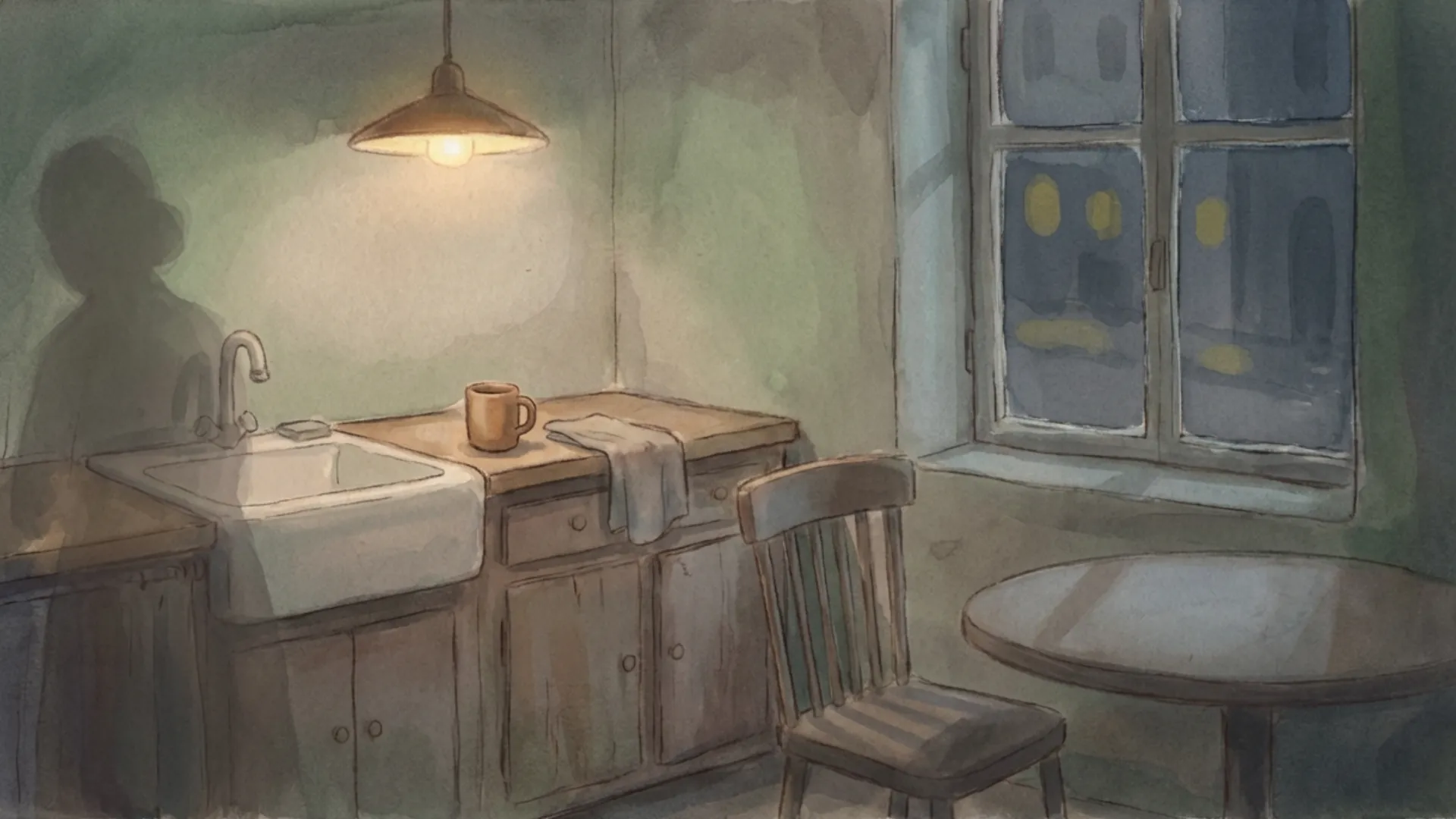
The Last Light in the Kitchen
The kitchen was still warm from the day.
Not hot. Just holding on.
A single light stayed on above the sink. The rest of the house had already gone dim, room by room, without discussion.
Outside the window, the street was quiet in the way that comes after dinner, when cars have decided to be elsewhere.
She stood at the counter with a mug that had gone untouched. The tea had cooled enough that it no longer gave off steam. She wrapped both hands around it anyway, more from habit than need.
There was a chair pulled slightly away from the table, not pushed in. It had been like that all evening. She noticed it again, as if it had moved on its own.
She did not sit.
The clock above the fridge ticked unevenly. One second felt longer than the next. It had always done that. She had meant to fix it once, but the days kept arranging themselves differently.
On the counter, a folded towel rested where she had left it. Damp at one corner. She turned it over so the wet part faced down. That seemed enough.
The window showed a rectangle of darkness with a few yellow squares across the street. Someone else’s kitchen. Someone else’s light left on for no clear reason.
She took a sip of the tea. It tasted thin now. She swallowed it slowly, then set the mug back where it had been, aligned with the edge of the counter. Almost aligned. She nudged it a little, then stopped.
In the other room, a floorboard shifted. Not a step. Just the house adjusting itself.
He had gone to bed earlier, without saying he was tired. He had paused in the doorway, as if he might add something, then nodded once and disappeared down the hall. The light in the bedroom had gone out a minute later.
She had stayed. There was no rule about it. No agreement. It simply happened this way some nights.
She reached for the sponge and wiped a spot on the counter that was already clean.
The motion was slow and slightly uneven, like writing a word you don’t intend to finish. When she was done, she rinsed the sponge and left it in the sink, not squeezed out all the way.
The clock ticked.
Her shoulders dropped a little. Not all at once.
She leaned her hip against the counter and looked at the floor. A small crack ran from the base of the cabinet toward the center of the room, stopping just short of the table. It had been there since before they moved in. Or maybe it appeared after. She wasn’t sure anymore.
She traced it with her eyes, then let her gaze wander.
The light above the sink hummed softly. Not enough to be annoying. Just enough to be noticed if everything else stayed quiet.
She turned it off.
The kitchen changed immediately. The dark was not complete, but it softened the edges. The clock face still glowed. The streetlight outside filled the room with a faint orange wash.
She stood there for a moment longer, hands empty now, feeling the cool air where the mug had been.
Then she picked up the towel and draped it over the chair instead of folding it again. It hung unevenly, one corner lower than the other.
That seemed fine.
She walked down the hall without rushing. The floor was cooler there. Halfway to the bedroom, she paused, listening. Nothing in particular. Just the low, familiar quiet.
When she reached the door, she did not turn on the light. She slipped into bed carefully, as if the space might be narrower than it was. He shifted once, then settled.
The room held its shape.
She lay on her back, eyes open, watching the faint pattern the streetlight made on the ceiling. It moved slightly as a car passed somewhere far away.
Her breathing slowed without effort.
The kitchen remained as it was.
The chair stayed pulled out.
The clock kept its uneven time.
Eventually, there was no need to keep track of any of it.
Aveline Moorwen