
The Sound That Remains
The hamlet sat where the road stopped trying.
A few houses, a stream that crossed behind them, the same trees growing a little crooked every year. People knew when to leave doors unlocked.
They knew who woke early.
They knew which windows stayed dark.
Ada and Aven grew up moving through it without asking permission.
They spent afternoons by the water, not swimming, just sitting where the bank dipped low. Ada skipped stones. Aven counted how many made it across. Sometimes neither of them did anything.
They listened to the sound the stream made when nothing disturbed it.
When they were younger, they lay in the grass at night. The ground still warm. The sky too large to finish looking at.
“Do you think anyone notices us?” Aven asked once.
Ada didn’t answer right away. She pulled a blade of grass apart between her fingers.
“Maybe,” she said. Then she rolled onto her side so her shoulder touched his. That seemed enough.
Years moved without announcing themselves. Ada began leaving earlier in the mornings. Aven stayed longer by the stream. They crossed paths anyway—on the path near the bakery, at the edge of the fields, sometimes just by chance. When they did, they slowed.
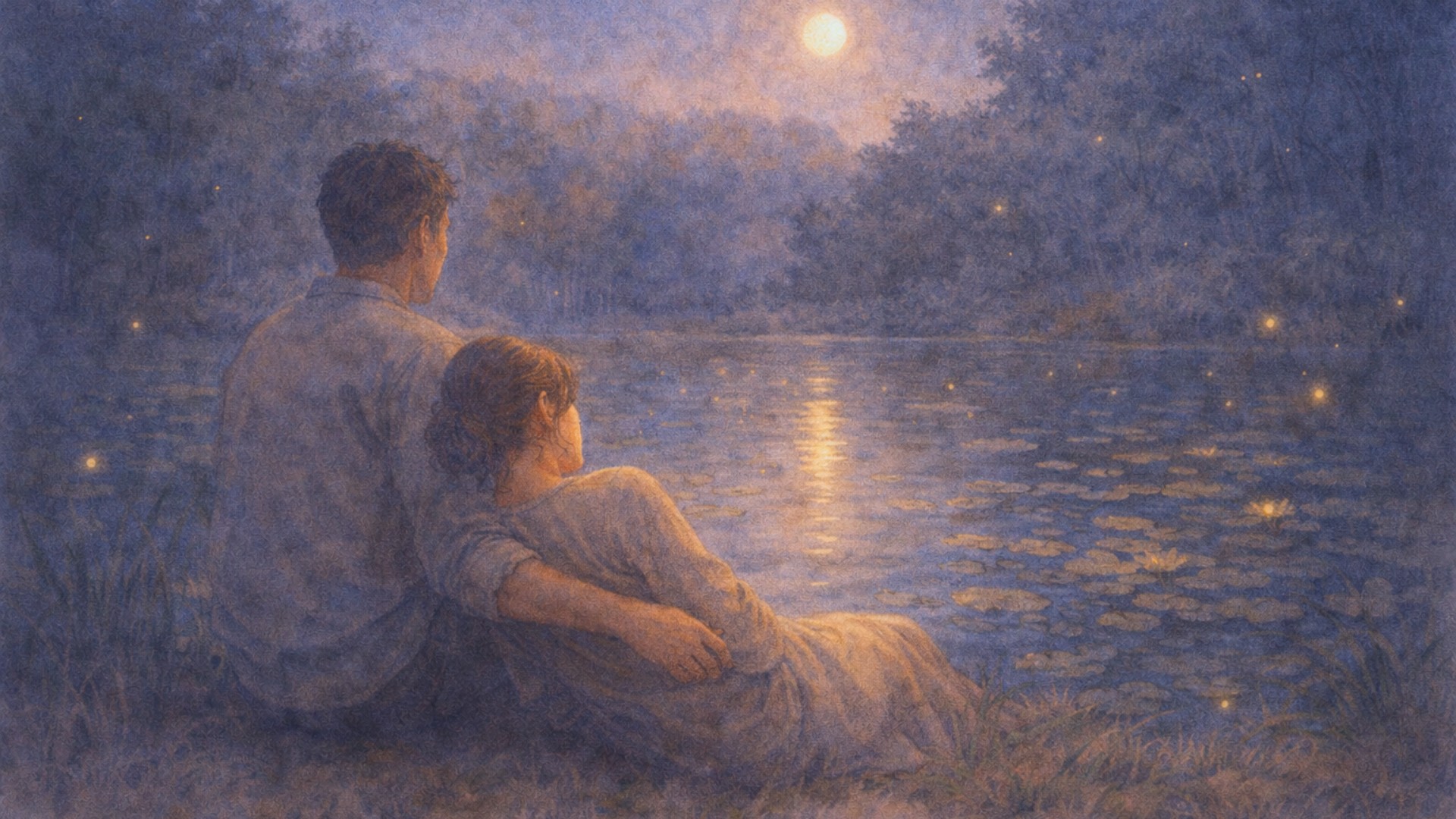
There was a place in the woods where lily pads crowded the water. They went there when the day felt too full. Ada took off her shoes. Aven folded his socks carefully, as if he might need them later.
They sat close but didn’t face each other.
Aven opened his mouth once, then closed it again. Ada noticed. She shifted her foot so it brushed his ankle.
He stayed quiet. The water stayed still.
The illness came without ceremony. No bells, no warning. Doors stayed shut longer. The bakery stopped opening every day.
Ada grew thin. She sat more than she walked. When Aven came by, he brought nothing in his hands. He sat beside her and held whatever she gave him—sometimes her wrist, sometimes just the edge of her sleeve.
She spoke less. When she did, it was about ordinary things: how the light fell across the floor, how the stream sounded lower this year.
One night, she rested her head against his leg. The moon was there, doing what it always did.
“Do you remember when we used to lie out here?” she asked.
“Yes,” he said.
She nodded, as if confirming something for herself.
He stayed awake while she slept. When she shifted, he adjusted his position so she wouldn’t have to.
Later, when her breathing changed, he noticed. He didn’t move. He kept his hand where it was.
Morning came the way it always had. The hamlet opened its doors again. The stream kept its pace.
Aven sat alone by the water after that. Sometimes he asked questions out loud. Sometimes he didn’t. He skipped stones the way Ada used to. They didn’t go as far.
People passed him on the path. They nodded. He nodded back.
On certain nights, he lay in the grass. He didn’t look for patterns in the sky. He let it be what it was.
The hamlet continued.
So did the stream.
And when the evening settled, when there was nothing left to do, Aven stayed where he was, listening to the sound that remained after everything else had stopped.
Aveline Moorwen